
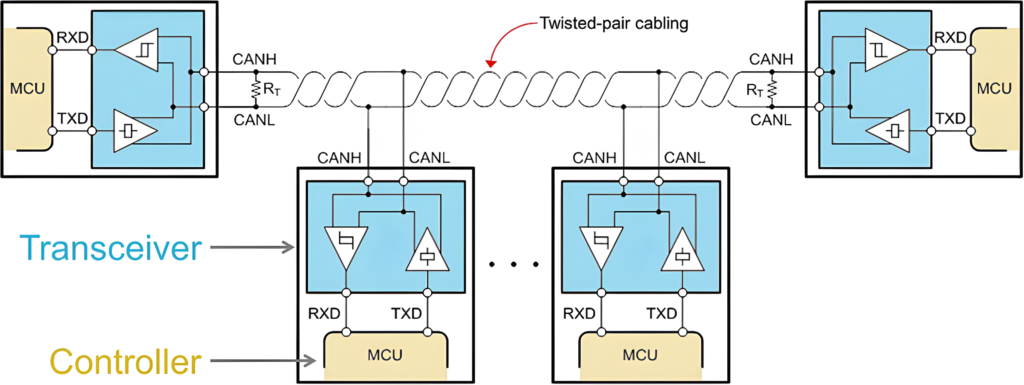
CAN Flexible Data-Rate (CAN-FD) is an enhanced version of the classic Controller Area Network (CAN) protocol, designed to support higher data throughput and larger payloads while remaining compatible with existing CAN networks.
CAN FD frames have variable data rate
- The data frames and CRC bits can be transmitted at higher data rates
- The rest of the data frames adhere to CAN
Benefits of CAN FD
- Increased bandwidth
- Lower relative cost and complexity
- Faster flash programming
- Backward compatibility
| Feature | CAN | CAN-FD |
|---|---|---|
| Max Payload | 8 bytes | 64 bytes |
| Max Data Rate | 1 Mbps | 2 - 8 Mbps (data phase) |
| CRC Length | 15 bits | up to 21 bits |
| Backward Compatible | Yes (with constraints) |
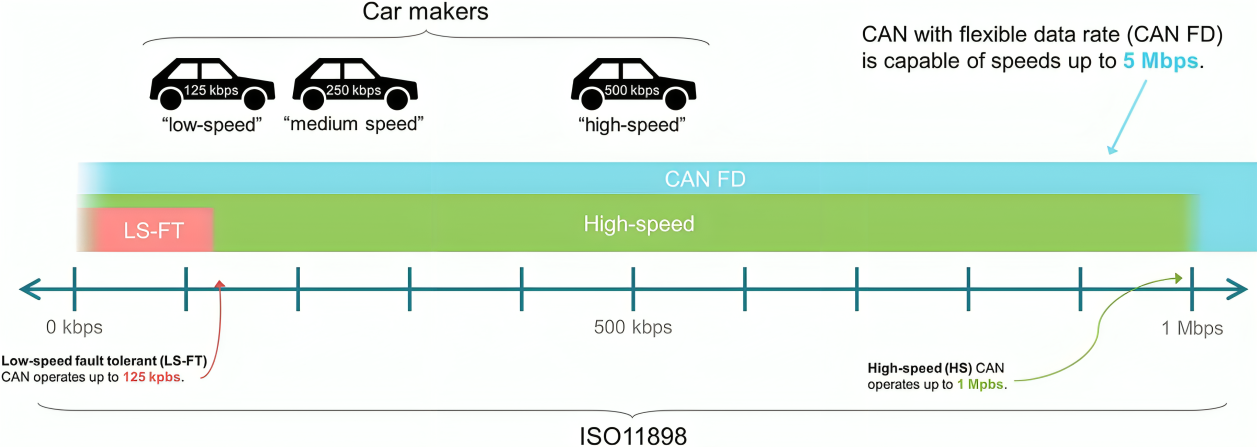
CAN and CAN FD Speed: The ISO11898 standard uses naming conventions similar to those used by car makers, occasionally leading to confusion.
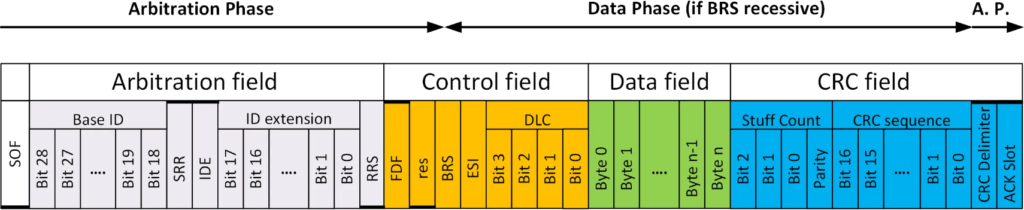
CAN FD Frame Format
FBFF: FD Base Frame Format: CAN FD with an 11-bit ID and up to 64 bytes of data. FEFF: FD Extended Frame Format: CAN FD with a 29-bit ID and up to 64 bytes of data.
Reference
[1] CAN and CAN FD Overview
[2] CAN and CAN FD Protocol
[3] Different types of CAN and CAN FD frames
Back to top of the page