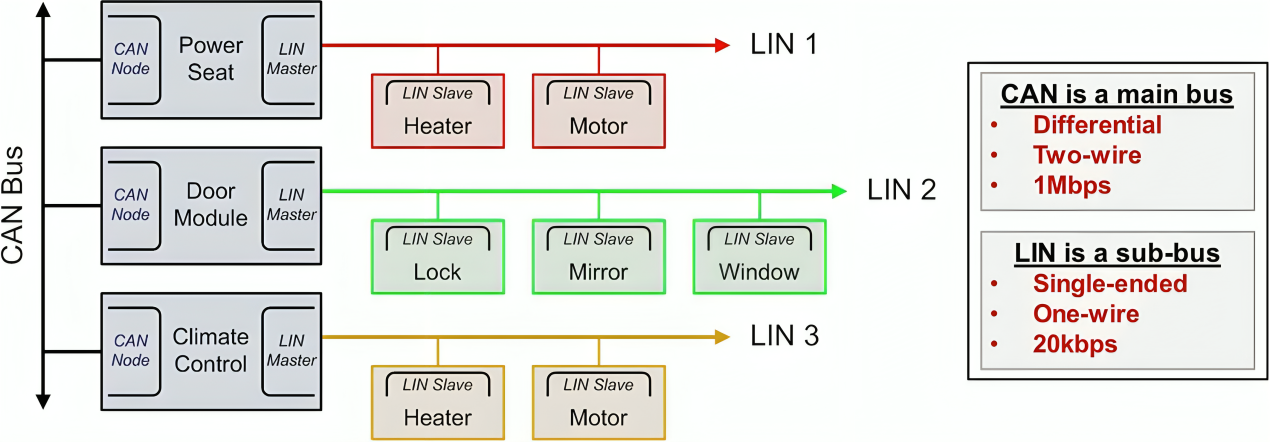
Local Interconnect Network (LIN) is a low-cost, low-speed serial communication bus mainly used in automotive systems to connect simple devices that do not require the performance or complexity of CAN.
| Feature | LIN | CAN |
|---|---|---|
| Topology | Master-Slave | Multi-Master |
| Wires | 1 | 2 (CAN_H, CAN_L) |
| Max Speed | 20 kbps | 1 Mbps (Classic), 8 Mbps (CAN-FD) |
| Payload | Up to 8 bytes | Up to 8 bytes (Classic), Up to 64 bytes (CAN-FD) |
| Cost | Very low | Higher |
| Typical Use | Body electronics | Powertrain, ADAS |
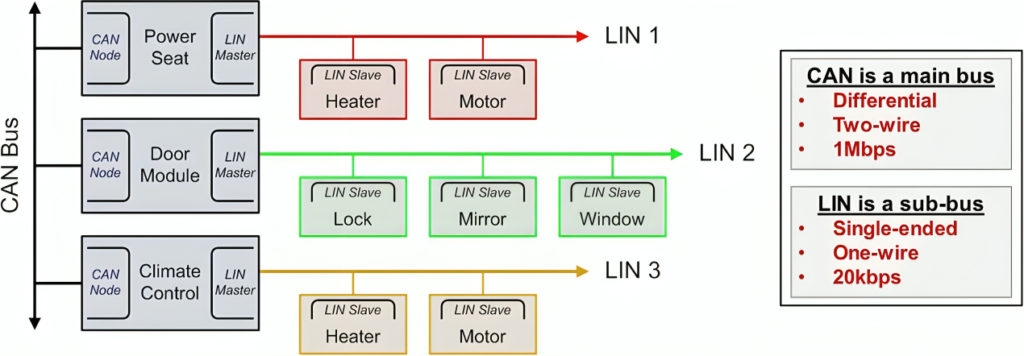
- LIN is a broadcasting, serial, one-wire interface, typically implemented as a sub-bus of a CAN network
- Allows automotive manufactures to reduce cost by offloading low-speed (<20 kbps), non-safety critical functions from a two-wire CAN bus to a one-wire bus
- One master coordinates communication between up to 16 slaves
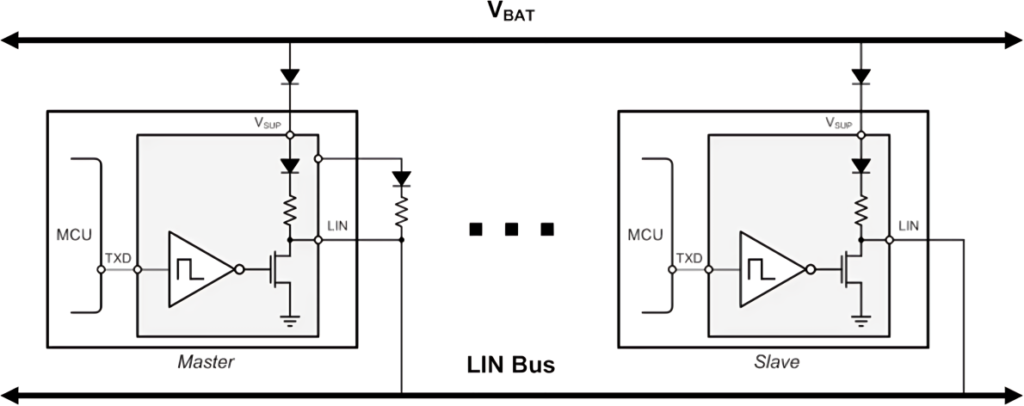
LIN Physical Layer
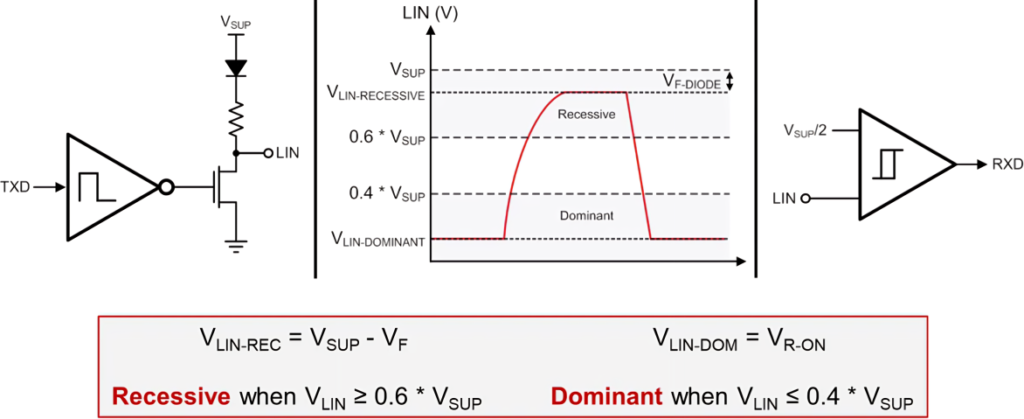
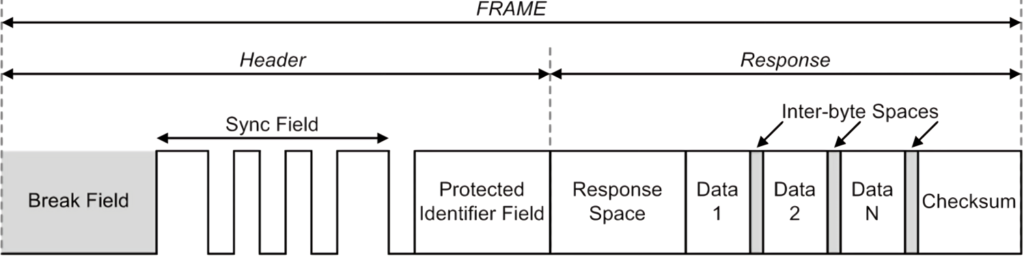
The LIN protocol specification defines
- All types of frames that may be sent on the LIN bus
- The fields that make up each type of frame
- The order of the bits in each field
Reference
[1] LIN Overview
Back to top of the page