
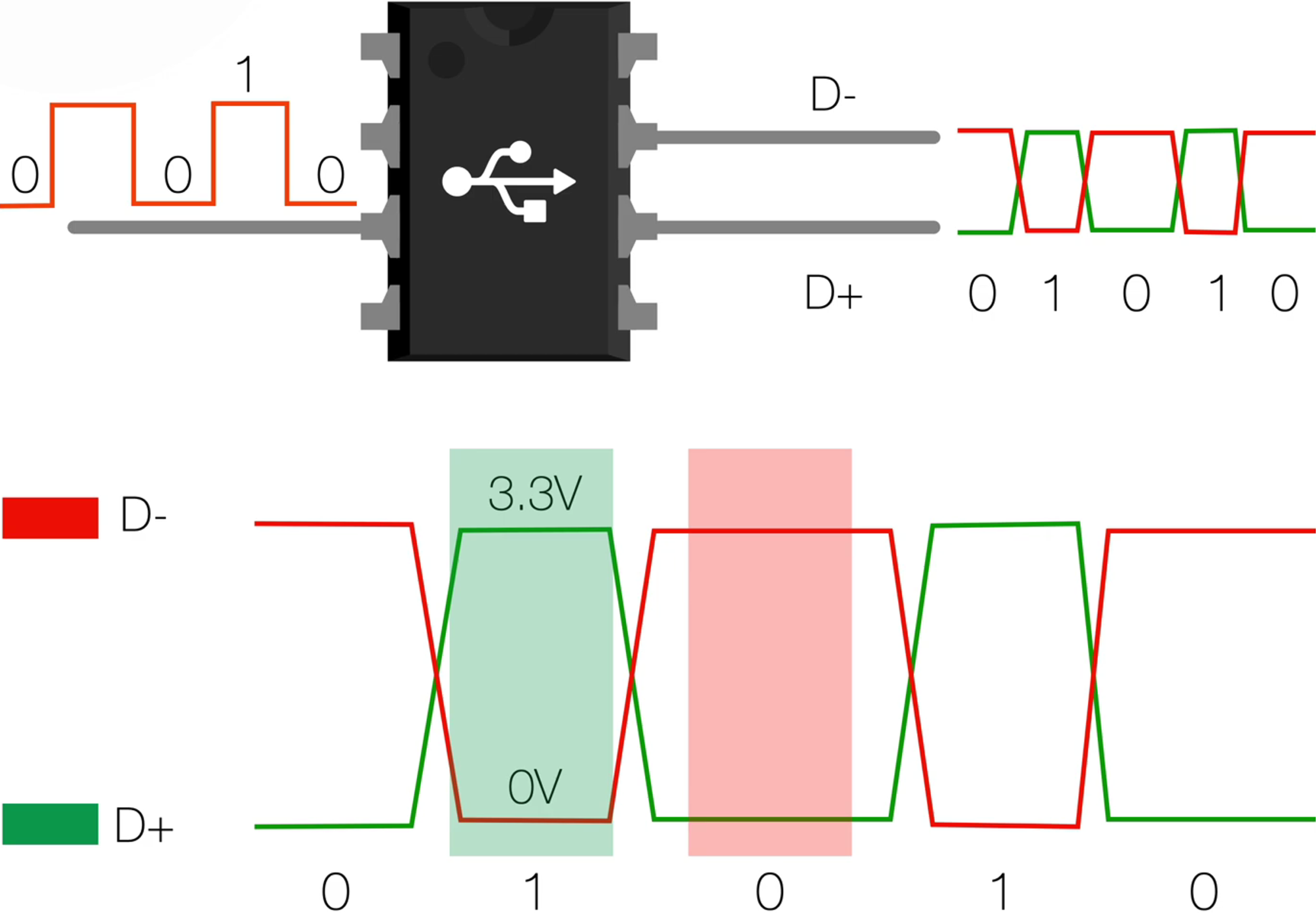
USB interface serves as a high-performance gateway that allows a microcontroller to communicate with external peripherals or a host PC using a standardized, hot-swappable connection. To move data from the digital logic of the processor to the physical copper wires, the system utilizes a MAC (Media Access Control) layer for protocol handling and a PHY (Physical Layer) for analog signal conversion. This architecture enables embedded devices to transition from isolated controllers to versatile nodes capable of high-speed data logging, firmware updates, or interfacing with complex human-interface devices. USB is:
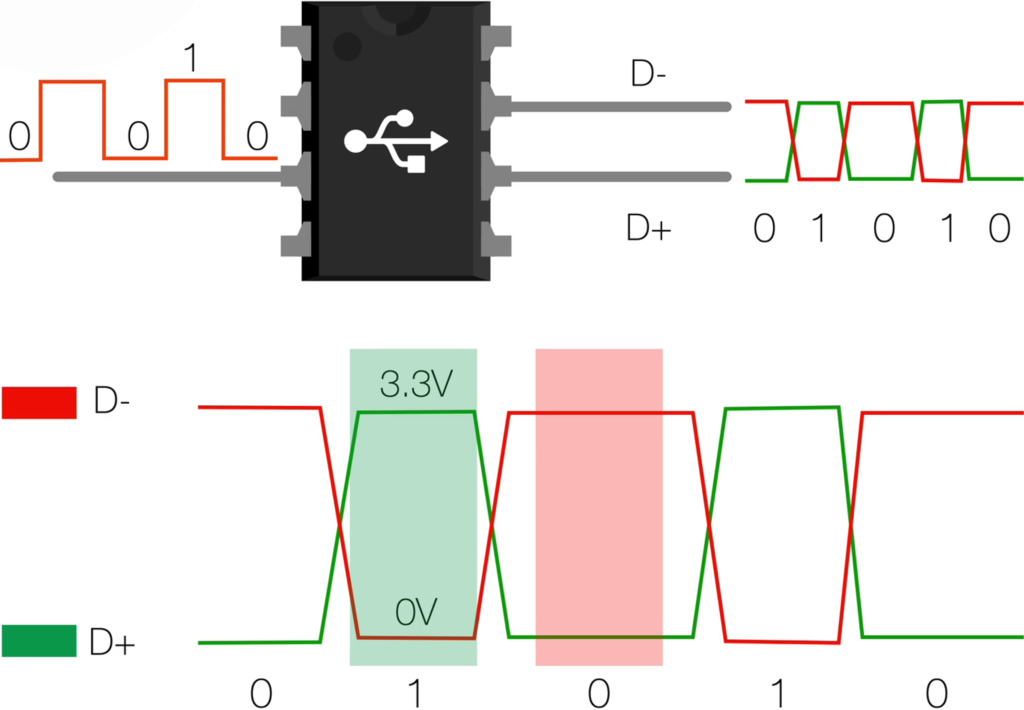
- Differential
- Asynchronous
- Serial
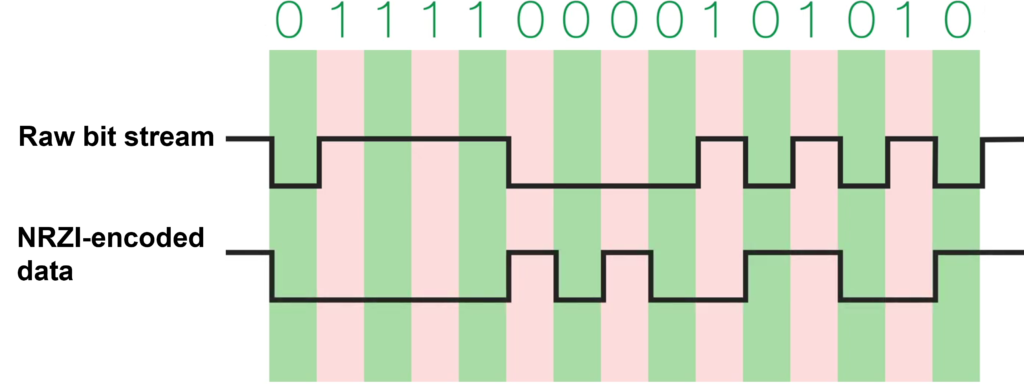
- Non-Return to Zero Inverted (NRZI) Encoded
- Bit Stuffed
| USB Version | Release Year | Data Rate |
|---|---|---|
| USB 1.0 | 1996 | 1.5 Mbps (Low Speed), 12 Mbps (Full Speed) |
| USB 2.0 | 2000 | 480 Mbps (High Speed) |
| USB 3.0 | 2008 | 5 Gbps (SuperSpeed) |
| USB 4 | 2019 | 20 / 40 Gbps (Compatible with Thunderbolt 3) |
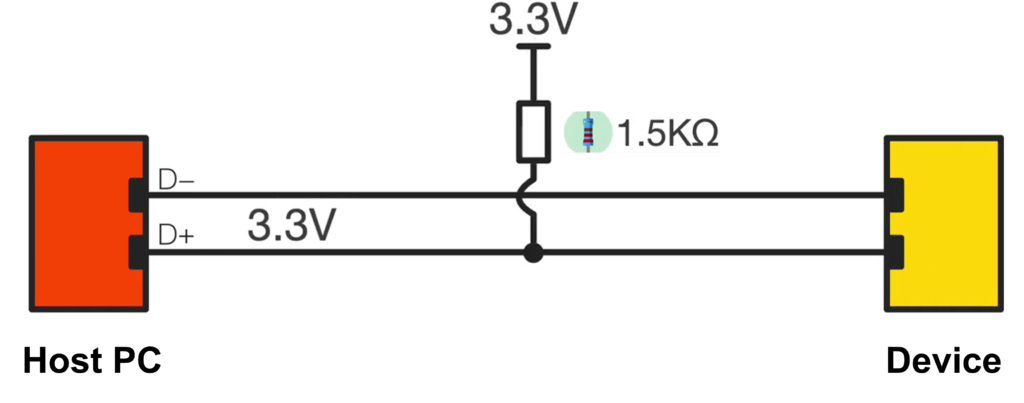
USB Differential Signaling: The 3.3V level shown is typical for USB Full Speed (12 Mbps).
NRZI-Encoded Data: The signal changes state (toggles level) only when representing a 0; it remains at the same level when representing a 1.
[1] USB转串口背后的秘密
[2] 实现接口大一统的USB数据线
Back to top of the page